
JPMorgan Chase Introduces AI for Performance Reviews Using In-House LLM Suite
JPMorgan Chase, the world’s largest bank by assets, has quietly introduced one of the most telling experiments in corporate AI adoption: staff are now invited to use an in-house large language model (LLM) to draft their year-end performance reviews.
The tool — part of the bank’s proprietary LLM Suite, a secure AI platform that already assists developers, bankers, and legal teams — allows employees to generate review drafts based on prompts and inputs they provide. It’s a subtle but symbolic shift: AI is no longer just analysing markets or reviewing code, it’s now shaping how humans assess each other.
AI in Corporate Performance Management
Managers across large organisations know how time-consuming review season can be. JPMorgan’s internal guidance frames the AI output as a starting point, not a finished product — the final text remains the manager’s responsibility. Salary and promotion decisions are explicitly excluded from AI’s domain. Still, the move underscores how deeply integrated AI has become in workplace processes once seen as inherently human.
Boston Consulting Group reported similar gains earlier this year, saying that using AI to help draft reviews cut writing time by 40%. The efficiency appeal is clear: synthesising large volumes of qualitative feedback is exactly the kind of repetitive cognitive task LLMs handle well.
AI Governance, Bias, and Human Oversight
But the deeper story lies in governance. When AI starts drafting human evaluations, the line between augmentation and automation blurs. What happens when an employee’s performance summary is partly written by a machine? How do organisations ensure that language models amplify fairness rather than encode subtle bias?
JPMorgan’s AI Strategy and $18 Billion Technology Investment
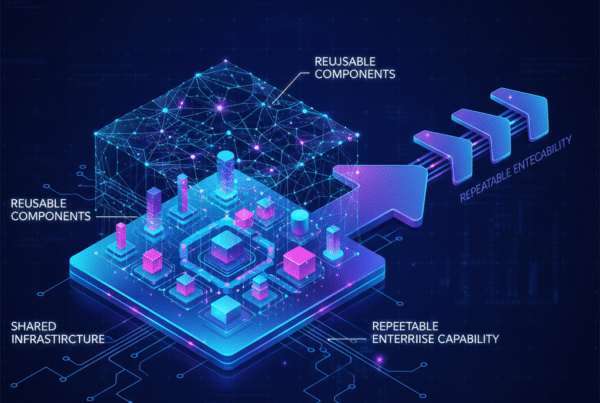
JPMorgan’s broader AI strategy offers a glimpse of that balancing act. With 200,000 employees onboarded to LLM Suite within eight months, and a $18 billion technology budget for 2025, the bank is treating AI not as a lab experiment but as infrastructure. CEO Jamie Dimon has been blunt: AI “will affect everything — risk, fraud, marketing, idea generation, customer service — and it’s the tip of the iceberg.”
The Future of AI in the Workplace
In a sense, performance reviews are a perfect test case. They are structured, sensitive, and consequential — a microcosm of modern knowledge work. If AI can safely assist in this domain, it can assist almost anywhere.
The key, however, is what JPMorgan appears to be signalling: AI can write the draft, but humans own the judgment.